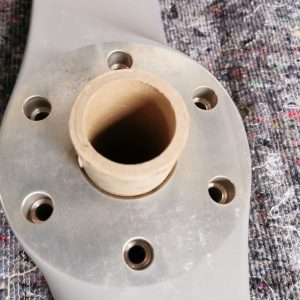
New, Never Installed offers replacement and project value for buyers seeking an unused fixed-pitch propeller with clear manufacturer identification and documented storage history.
Accurate model terminology helps prevent confusion with visually similar propellers that may have different pitch, diameter, hub, or aircraft applications.
These related phrases connect the product with buyers seeking a durable and comparatively straightforward general aviation propeller design.
A Lycoming O-320 Propeller may only be appropriate for selected engine and airframe combinations, even when the basic engine family appears compatible.
The Two-Blade Aircraft Propeller, Sensenich Aircraft Propeller, Replacement Aircraft Propeller, and Certified Aircraft Propeller phrases can help professional buyers locate a component for maintenance, restoration, new construction, or inventory.
Identifying the Sensenich Propeller Correctly
Complete identification reduces unsuitable purchases and gives maintenance professionals the information required for further review.
Any approved change should appear in suitable records and markings rather than relying only on verbal descriptions.
Evaluating an Unused Sensenich Propeller
An unused propeller may still develop coating damage, corrosion, moisture exposure, scratches, dents, contamination, or packaging-related abrasion.
A never-installed statement may be supported by the absence of operational erosion, mounting impressions, spinner contact, bolt marks, and documented operating time.
Matching Propeller Design to Aircraft Performance
Correct matching protects the engine, propeller, and aircraft from unsuitable loading or operation.
The pitch configuration affects engine RPM, acceleration, climb characteristics, cruise behavior, and overall loading.
Protecting Aluminum Propeller Surfaces
Material condition should be reviewed by appropriately qualified aviation personnel.
Responsible care supports the condition of the Aluminum Aircraft Propeller.
74-Inch Aircraft Propeller Dimensions
Verified dimensions support correct replacement-propeller selection.
The receiving aircraft must provide sufficient propeller clearance under applicable loading and operating conditions.
Blade Pitch and Engine Loading
Verified configuration helps buyers understand the intended application of the 60-Inch Pitch Propeller.
Any pitch modification should be completed by an appropriately qualified facility and documented accurately.
Matching the Propeller to the Correct Engine
Compatibility depends on the exact aircraft model, serial range, engine designation, propeller approval, hub, bolt pattern, diameter, pitch, and operating limitations.
A previous aircraft application can provide useful context but does not replace current approved check here technical data.
Evaluating Both Propeller Blades
A Two-Blade Aircraft Propeller should be evaluated as a complete matched assembly rather than as two independent blade components.
The buyer should examine both blades for differences in paint, coating wear, pressure marks, corrosion, shape, tip condition, and packaging contact.
Inspecting the Propeller Mounting Area
The mounting face should remain clean, flat, protected, and free from defects that could prevent correct seating.
Fasteners should not be selected solely by visual appearance, basic diameter, or thread size.
Evaluating Scratches, Dents, and Finish Damage
Blade faces and backs should be examined for pressure marks, stains, chemical exposure, paint defects, surface distortion, and trapped contamination.
Unauthorized sanding, filing, blending, refinishing, or polishing should be avoided.
Corrosion Inspection and Storage History
Aluminum propellers can develop corrosion after exposure to moisture, condensation, coastal air, chemicals, damaged coatings, or unsuitable storage materials.
Protective covers should prevent contamination and impact without encouraging condensation around the aluminum.
Certified Aircraft Propeller Status
Certified design status does not automatically establish the present serviceability, airworthiness, or installation eligibility of an individual propeller.
All documents should remain permanently associated with the correct physical propeller.
Confirming the Sensenich Serial Number
Reliable traceability improves professional buyer confidence.
Complete history supports future maintenance, installation research, and resale.
Aircraft Propeller Condition Review
The seller should provide photographs of both sides of each blade, leading edges, trailing edges, tips, hub, mounting holes, data plate, packaging, and any damaged areas.
- Determine whether factory paperwork, release documents, mounting hardware, spacers, spinner components, protective covers, and shipping materials are included.
- Review the history for trial fitment, dropped handling, transportation impact, moisture exposure, chemical contamination, improper storage, or unauthorized repair.
- Inspect and photograph the propeller immediately after delivery before cleaning, measuring, balancing, repairing, mounting, or modifying it.
Preventing Transportation Damage
Blade tips, leading edges, trailing edges, mounting surfaces, bolt holes, identification plates, and factory coatings require suitable protection.
The propeller should remain immobilized throughout transport.
Storing the 74DM6-0-60 Propeller
During storage, the propeller should remain clean, dry, supported, protected from impact, and separated from corrosive chemicals or uncontrolled environmental exposure.
Identification labels, serial records, release documents, and included hardware should remain associated with the correct propeller.
Installing the Sensenich 74DM6-0-60
The technician should verify the complete model, serial number, diameter, pitch, hub, flange, bolt pattern, spacer arrangement, mounting hardware, torque procedure, and installation eligibility.
Disciplined installation supports dependable Two-Blade Aircraft Propeller operation.
A ground run should not replace incomplete compatibility research or required technical inspection.
Protecting Long-Term Propeller Condition
Unapproved filing or sanding can remove excessive material and alter the blade geometry.
Recurring vibration should prompt review of the propeller, spinner, engine mounts, flange, ignition system, and engine condition.
Replacement Propeller Ownership Costs
Original packaging can improve presentation and provenance but does not replace physical examination.
Buyers should compare complete and documented propeller packages rather than price alone.
Selecting a General Aviation Replacement Propeller
New, Never Installed can become a valuable general aviation propeller.
Careful technical and commercial review can reduce compatibility problems, missing-hardware expenses, storage-related concerns, installation delays, inspection costs, and documentation issues.
Whether buyers need a Sensenich Fixed-Pitch Propeller, Sensenich Aluminum Propeller, Fixed-Pitch Aluminum Propeller, or Aluminum Aircraft Propeller, current condition and dimensional conformity should be verified.
With transparent records, protected shipping, correct aircraft-and-engine fitment, careful mounting, and appropriate inspection, the Sensenich propeller can support a professional aviation project.